Terry’s View – Why the Housing Fund Is A Failure
The Housing Australia Future Fund (HAFF) was sold to Australians as the Federal Government’s answer to the nation’s housing crisis. It was supposed to deliver tens of thousands of desperately needed homes while proving that Canberra could tackle one of the country’s biggest challenges.
Instead, it has become a case study in bureaucratic failure, unrealistic promises and poor execution.
According to the Australian National Audit Office, it is nowhere near meeting its targets. Since 2023 the $10 billion fund has only delivered 1,432 of the 40,000 social and affordable rental homes it promised to deliver by 2029.
The Auditor-General says there has been “insufficient transparency” over delivery, costs and outcomes, weak governance arrangements and inadequate oversight.
Meanwhile, Australians continue to experience record rents, critically low vacancy rates and worsening affordability while the government’s flagship response remains bogged down in administration.
The construction sector is indeed facing one of its toughest periods in decades, and there is no doubt builders are confronting labour shortages, rising costs and planning delays. But those challenges were hardly a surprise. Anyone familiar with Australia’s housing market knew these constraints existed before the HAFF was announced.
Good policy accounts for reality rather than pretending it doesn’t exist.
This is the fundamental problem with the HAFF. It has been built around political announcements rather than practical delivery.
Australia desperately needs more homes. More specifically, it desperately needs more affordable homes.
What it doesn’t need is another expensive bureaucracy producing reports, restructures, governance reviews and excuses while housing shortages continue to worsen.
New Home Buyers Cautious

New home sales levels remain higher than last year – despite a 4.6% decline in June, according to the Housing Industry Association.
Its survey of Australia’s largest volume home builders shows sales dropped 4.6% in June but remain 18.4% higher than the previous financial year. Over the past 12 months, new home sales are up in all states, with the biggest increases in Victoria (29.5%) and New South Wales 19%.
HIA Chief Economist Tim Reardon says the June figures don’t represent a drop in the need for more housing in Australia but are instead a sign that buyers are becoming more cautious in response to higher borrowing costs and Federal Budget changes to property investment taxes.
“The consequence of recent policy announcements is that more than 80% of builders expect commencements of new homes to fall by at least 5%,” he says.
Reardon says the prohibition of borrowing to build a new home by some superannuation funds is also expected to have an adverse effect on sales, particularly in the apartment market.
The HIA's latest New Home Sales report shows a 50% increase in cancellations of new home sales contracts in June compared to the previous month.
Reardon says it is too soon for the budget decisions to have this impact on cancellations and it is likely caused by rising interest rates constraining borrowing capacity and conditional finance being revoked.
“Builders anticipate that a further 2,500 contracts to build a new home that have been signed by Self-Managed Super Funds will be cancelled in coming months when the Budget legislation comes into effect,” he says.
“The coming months will show whether recent weakness in sales reflects a temporary loss of confidence or a more prolonged period of reduced investment among new home buyers.”
Investors Taking a Breather

New data shows investors are taking a breather as they continue to digest how Federal Budget changes affect them.
Loan Market Group data shows investor loan applications have dropped by 31% since early February. Owner-occupier applications dropped by 26% during the same period.
Loan Market executive chairman Sam White says it appears investors are taking time to re-evaluate their strategies.
"Looking forward, there are a number of factors that will impact whether buyers come back to the market. Cash rate changes greatly impact confidence - increases will likely see a further decline in buyer numbers and decreases typically see a return to the market.
"The silver lining is reduced competition has led to opportunities for those in a position to purchase, including upgraders and savvy first-home buyers."
The data shows that new-building investment loans have only dropped 15% since February compared to a 40% drop in loans to investors for existing properties.
Despite the drop-off in investment loans, first home buyers have not yet made a big comeback, with loans to first home buyers down 19% since February.
Even though the number of borrowers taking out loans has dropped, the amount they are borrowing continues to rise and is up by 2% since the start of the year.
Where All Property Types Are Firing
Queensland has overtaken Western Australia to become Australia’s strongest multi-sector property market for the first time, according to the Australian Property Institute quarterly survey.
Australian Property Institute Chief Economist Dr Sherman Chan says Queensland is the only state where residential, office, retail, industrial and agricultural property markets are all in positive territory.
Despite the strong quarterly result, it is Adelaide which has emerged as the strongest residential property market over the past two decades.
Its capital city house prices are up 175% over the past 20 years, ahead of Hobart (172%) and Sydney (171%).
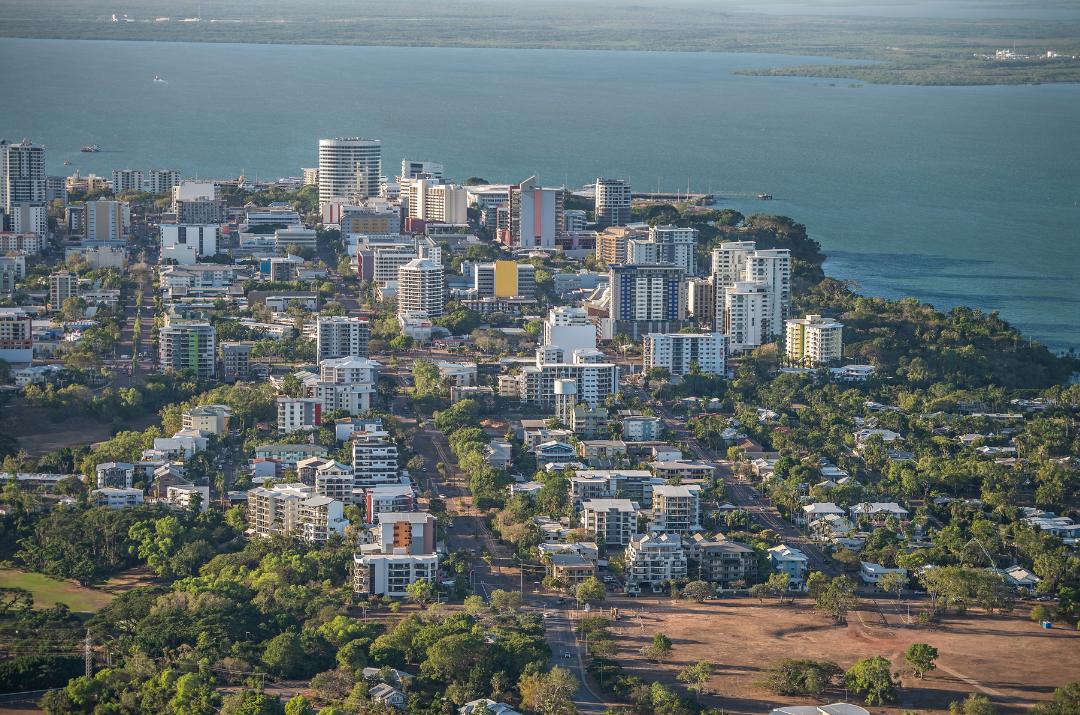
Brisbane and Melbourne are both up 169%, Canberra, 154%, Perth 123% and Darwin 102%.
By comparison, inflation is up by 67% over the same period.
The report says Australia’s agricultural land has emerged as the best performing property sector over the past two decades, with Tasmania, Victoria and Queensland all recording above average growth.
Between 2005 and 2024, the average annual return for agriculture was 12.8%, while industrial land returned 8.2%, residential 7.7%, and commercial 7.2%.
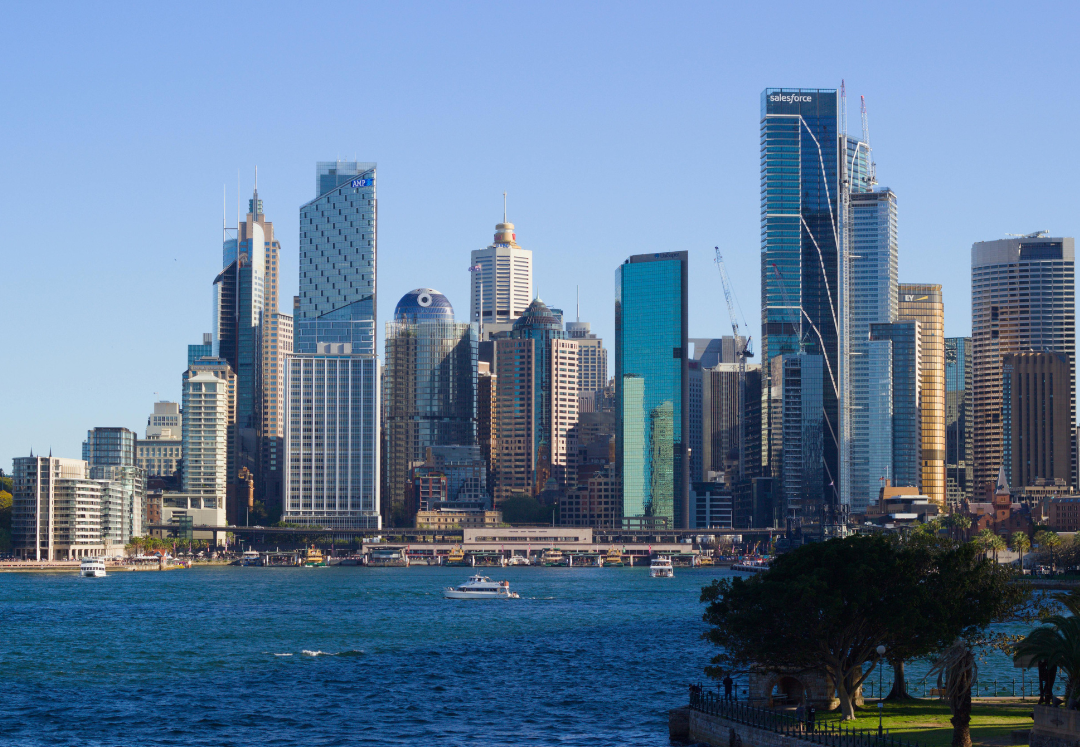
In the commercial property market, Sydney is the strongest performer over the past 20 years with its values up by 176%, followed by Perth, Melbourne, Brisbane, Adelaide and Canberra.
Price Weakness Unlikely To Last
While demand for property has softened in recent weeks, new analysis from Deloitte predicts any fall in home prices will be temporary.
It says Australia is still not approving or building nearly enough homes for its population, with many approved projects yet to begin construction, which means ongoing demand will stop any long-term price declines.
Deloitte Access Economics Partner Stephen Smith and economist Dan Kelly say the combined effect of tighter monetary policy and the reaction of investors to the tax changes has been a softening in the housing market.
But they say that the “deeper forces” that have driven Australian home prices higher remain firmly in place, which means that until supply catches up, softer prices are likely to be temporary.
“While housing price growth has softened, supply constraints are likely to keep upward pressure on prices over the medium term,” the analysis says.
“Improved affordability remains a long way off, and the structural challenge remains supply”.
It says Australia remains well short of its housing targets and until the supply side catches up there will only be short-term limited affordability relief for buyers.