New Build Loans Rise

The number of loans issued for the construction or purchase of new housing is increasing.
The latest Australian Bureau of Statistics lending data for the June quarter shows that new build lending is up for both owner-occupiers and investors.
Owner-occupier loans for new housing are up by 3% and investor loans are up by 4.2%.
The data shows that in FY2026 there were 55,290 new housing loans to owner-occupiers and 41,500 to investors.
HIA Senior Economist, Tom Devitt, says the data shows that demand for housing is recovering, although he warns the impact of three interest rate increases and Budget tax increases is more likely to become visible in the data in the second half of the year.
“The effect of recent Budget tax increases on investors is going to be very important to watch, given the increasing importance of investors in the housing recovery,” he says.
Every jurisdiction had an increase in lending for new homes in the past financial year, led by the Northern Territory (+15.3%), Tasmania (+13.2%) and Western Australia (+12%).
Rent Crisis Deepens

The pace of property price growth may be easing, but rental growth continues to charge ahead.
REA Group’s data shows that there are fewer properties available for rent and asking rents soared in the past three months.
It says rents have risen in 57.6% of suburbs and unit rents have risen in 61% of suburbs in the three months to July.
In Melbourne, 150 unit markets and 176 house markets have chalked up rent increases of at least $1000 per year.
In Queensland, 95.6% of the house and unit markets analysed had increases in the past 12 months with some up to $150 extra per week.
REA Group economist Anne Flaherty says wages are not typically keeping up with the level of rental increases.
She says the increases are adding further pressure to household budgets.
“We often think about things in percentage terms, but when you actually look at the dollar changes, the growth is significantly more, particularly in light of the fact that the cost of everything else has gone up at the same time,” she says.
Auctions Improving

After a few tough weeks, auction clearance rates have now hit a 12-week high.
Capital city clearance rates last week were 51.4%, as the number of properties being offered under the hammer remains low.
According to Cotality data, 1,382 properties were taken to auction last week – up 9.9% on the previous week, but below the same time as last year.
Cotality economist Annabelle Mezieres says clearance rates improved even though more homes went to auction in most of the capital cities.
Melbourne performed the best with its clearance rate hitting 56.8% - the highest result since early May.
Sydney’s clearance rate is up to 51.5% and Adelaide increased to 46.8% while Brisbane’s clearance rate dropped to 35.4%.
Mezieres expects auction volumes to rise over the next fortnight, with about 1,390 homes scheduled in each of the next two weeks, around 5% above this week's volumes.
Mezieres says it appears more stock is coming onto the market as spring approaches.
Vacancy Rates Remain Low
Vacancy rates remain stubbornly low, according to the latest data from SQM Research.
The national vacancy rate remains at 1.3% in July 2026, unchanged from June, which equates to 40,771 vacant dwellings.
Brisbane, Perth, Adelaide, Darwin and Hobart all have vacancy rates below 1%, with Darwin the lowest at just 0.3%.
Sydney and Melbourne are both 1.7% while Canberra has the highest vacancy rate of the capital cities at 1.8%.
SQM Research managing director, Louis Christopher, says the figures suggest there has been some stabilisation in rental availability, although the underlying market remains tight.
“Total vacancies have increased compared with this time last year, particularly in Sydney and Canberra, but five capital cities are still recording vacancy rates below 1%,” he says.
Christopher says there is significant pressure on tenants.
“Overall, the rental market remains undersupplied. Until we see a more sustained increase in available rental stock, we expect affordability pressures to remain elevated.”
Listings Surge
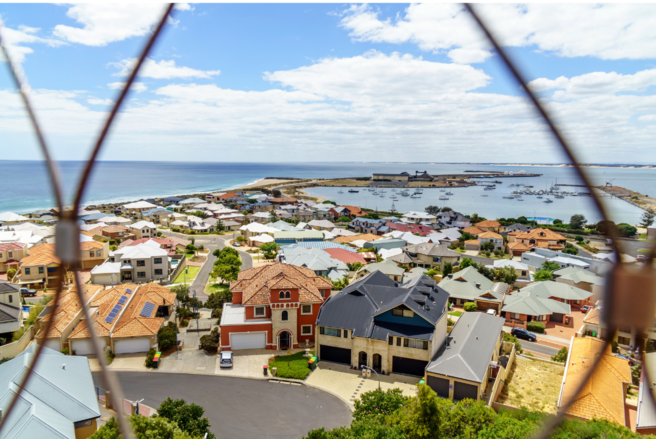
Listings are finally turning around with new data showing a surge in some states, particularly Western Australia and South Australia.
REA Group says there has been a jump in listings in the smaller capital city markets while SQM Research data shows that real estate advertisements rose 12.4% in July compared with June, with 278,984 dwellings listed for sale nationally.
According to Domain, the highest increase in listings in Western Australia is 89.8% in Cockburn, while in New South Wales Chatswood – Lane Cove are up by 85.3% and in Toowoomba in Queensland listings are up by 83%.
In Victoria, Frankston has recorded the biggest increase of 52.7%; in South Australia, Onkaparinga is up 43.3%; in the Northern Territory, Palmerston is up 27.8%; Brighton in Tasmania is up 44.4% and Western Creek in the ACT is up by 62.3%.
Domain chief economist Nicola Powell says despite the lift in listings, affordability still remains stretched.