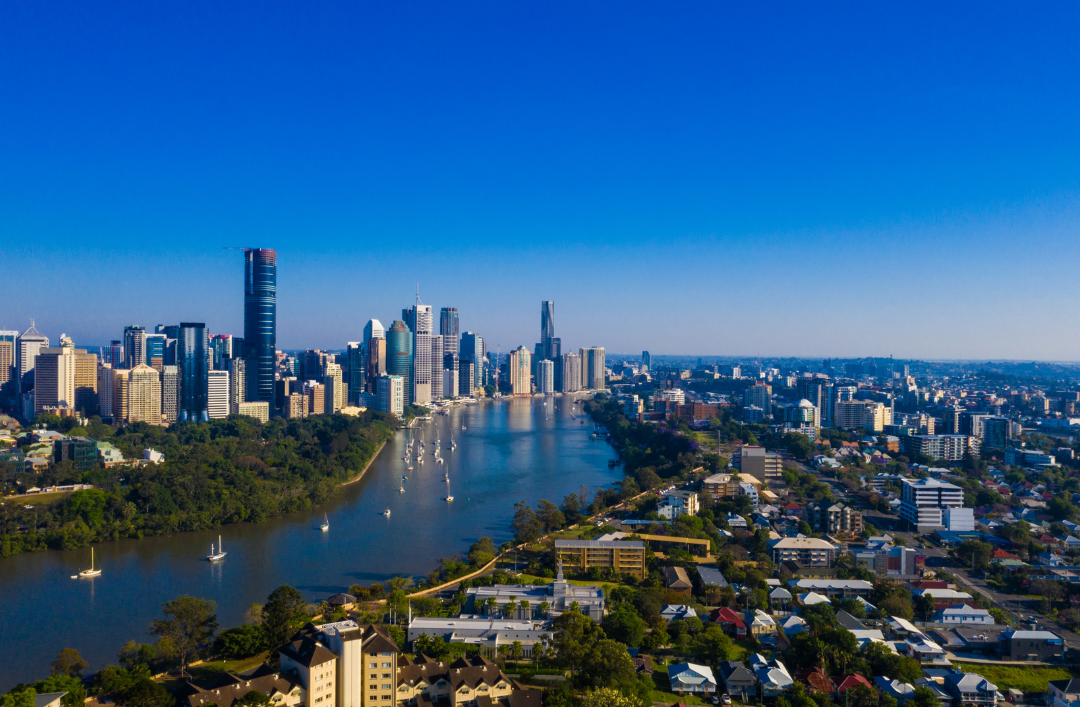
Small Capital Cities Lead the Way

Australia’s smaller capital cities are continuing to lead the way for property price growth.
New data from Cotality shows that in the past month house values are up the most in Perth, Darwin, Brisbane and Adelaide, while Sydney and Melbourne recorded small declines.
The pattern is repeated over the past 12 months with median house values up by 24.3% in Perth, 19.7% in Darwin, 19% in Brisbane and 11.4% in Adelaide.
While Melbourne and Sydney median house prices still increased in the past 12 months, the increases are much smaller at 3.4% and 4.8%, respectively.
Cotality research director, Tim Lawless, says the mid-sized capitals continue to reach record highs.
“Housing outcomes are increasingly diverse from city to city and across the pricing spectrum,” he says.
“The mid -sized capitals, as well as Darwin, are all recording growth of 1.2% or more on a month -to - month basis, while Sydney and Melbourne navigate a subtle decline trend that has been evident since December last year.”
Regions Need Housing Focus

With almost ten million Australians now living outside capital cities, it’s imperative that a national housing plan be created for regional Australia, according to the Housing Industry Association (HIA).
HIA Chief Executive Industry Policy, Simon Croft, says the “one size fits all” approach to housing policy is failing the regions.
He says regions are experiencing strong population growth but continue to face chronic housing shortages, rising rents and limited housing choice for workers, families and young Australians.
“Regional communities are doing the heavy lifting when it comes to population growth, yet housing policy remains overwhelmingly metropolitan-focused,” he says.
Croft says a dedicated, long-term national housing plan that explicitly recognises the distinct pressures faced by regional, rural and remote communities is needed.
“Housing must be treated as critical economic and social infrastructure, especially in regions expected to absorb future population and workforce growth,” he says.
“The housing crisis is not confined to cities - it is even more pronounced in the regions. It demands a coordinated national response that finally puts regional Australia at the centre of housing policy, not as an afterthought.”
Families Bunk in Together

Multigenerational living is growing in popularity with new analysis showing more families are open to the concept.
Research from AMP shows that as housing unaffordability and cost-of-living pressures continue, more than half of Australians (55%) say we should embrace multigenerational living.
Support for multigenerational living is strongest among younger Australians, with 68% of 20- to 39-year-olds in favour of the concept. Women are also more supportive than men (58% vs 52%).
The research also shows that almost 40% many younger Australians (20 to 39) are relying on a future inheritance to get into the property market.
AMP director of retirement, Ben Hillier, says many younger Australians are rethinking what the ‘Australian dream’ looks like.
“For many, support is no longer just about the ‘Bank of Mum and Dad’ – it’s about the ‘House of Mum and Dad’; with extended families open to sharing housing, costs and care in more practical ways,” he says.
According to the 2021 Census 335,000 households include three or more generations of adults living together, a 22% increase from 2016.
Aussies Getting Wealthier

Rising property values are driving up Australia’s level of household wealth.
Australian Bureau of Statistics data shows that the household wealth rose by 2.5% or $453.7 million in the December quarter.
ABS Head of Finance Statistics, Dr Mish Tan, says rising house prices continue to be the main driver of growth in household wealth. Residential land and dwellings are up by 3.2% of $368.6 billion during the quarter.
This contributed two percentage points to the growth in household wealth, while superannuation assets contributed 0.3 percentage points.
“The mean price of residential dwellings was up 2.7% in the December quarter 2025, with strong growth seen in Western Australia, Queensland and South Australia,” Tan says.
The December quarter has the strongest growth in housing loans since December 2021, with strength across all borrower types.
Tan says recent policy changes for first home buyers are reflected in the strength of new loan commitments.
The expansion of the Australian Government 5% Deposit Scheme and the Australian Government Help to Buy Scheme have contributed to this.
Investors On The Hunt

Property investment activity has surged with a 64% increase in investor loans in the past three years.
The PropTrack Westpac Investor Report says investors accounted for a near-record share of loans in South Australia and the Northern Territory in 2025.
PropTrack Senior Economist, Angus Moore, says investor demand is being driven by tight rental market conditions and rapid rent increases.
In Queensland investor loans are at the highest level since 2004, in Western Australia, it is the highest level since 2010 and in New South Wales, since 2017.
Investor activity increased in the second half of 2025 following a period of softer activity – although the share of new investor lending in Victoria is still below average for the state.
Moore says nearly half of online searches on realestate.com.au from investors are for properties priced below $700,000.
He says investors are more likely to favour more affordable homes than other buyers. About 45% of first-home buyers, and 21% of existing homeowners, search in that price range.